The Beauty of Telugu Script: Why It Is Called the Italian of the East
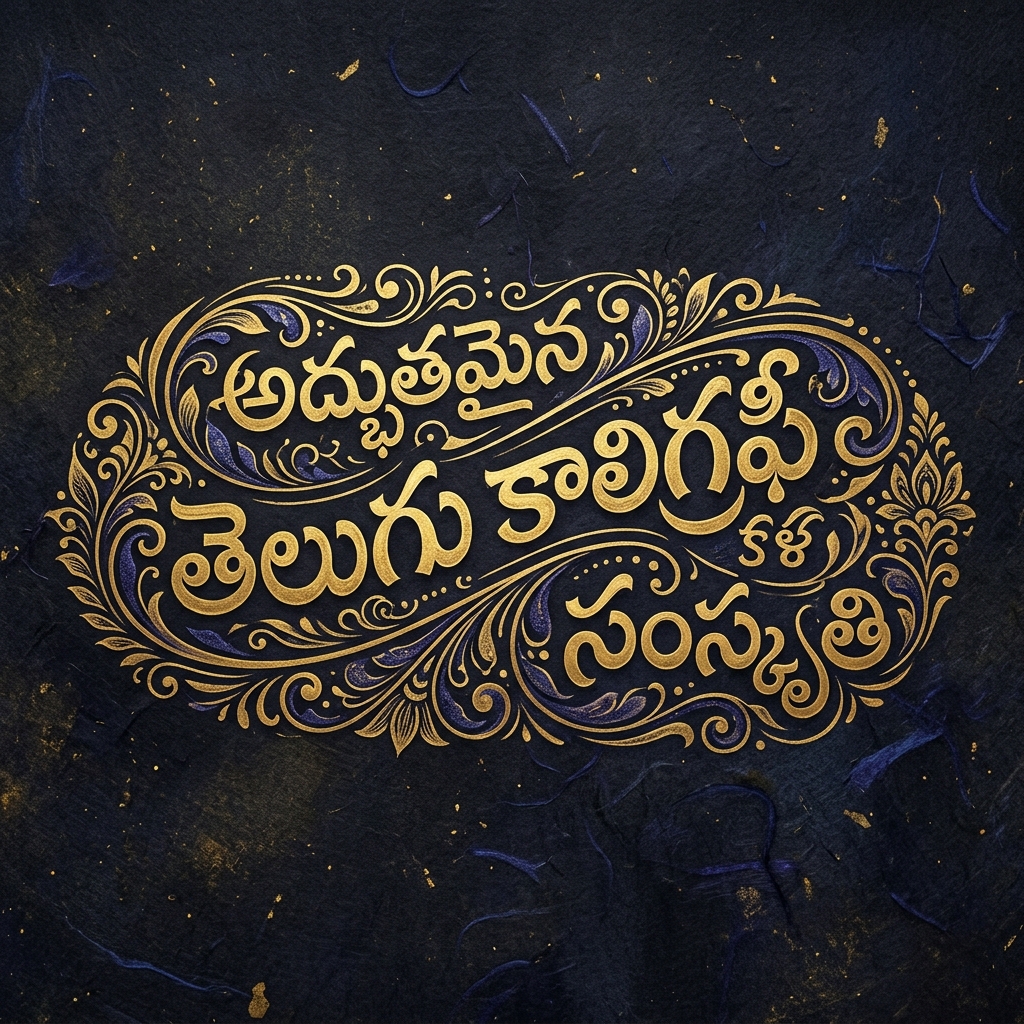
There is a famous phrase that has been repeated by scholars, linguists, and travel writers for well over a century: Telugu is the Italian of the East. The comparison is not about the language's grammar or vocabulary — it refers specifically to the melodious, vowel-rich phonology of spoken Telugu and, equally, to the distinctive visual beauty of the written script.
In this article, we explore what makes the Telugu script aesthetically unique among the world's writing systems, trace its evolution across two millennia, and examine why modern typographers and designers continue to find it one of the most rewarding scripts to work with.
The Curves That Define Telugu
If you place the Telugu alphabet next to scripts like Devanagari, Tamil, or Latin, the most immediately obvious difference is the prevalence of rounded curves. Nearly every Telugu letter features circular or semi-circular strokes. The characters అ, ఉ, ఒ, క, గ, ద, and many others are built around smooth, flowing arcs rather than angular lines.
This roundedness is not merely decorative — it has a historical origin. Telugu script evolved from the Bhattiprolu script of the 3rd century BCE, which was inscribed on stone and palm leaves. The palm leaf writing surface strongly favored curved strokes because straight horizontal lines would split the leaf along its grain. Over centuries, this material constraint shaped the entire aesthetic DNA of the script, producing the gracefully rounded forms we recognize today.
"Every letter in Telugu appears to have been drawn by someone who loved circles. It is a script that seems to dance on the page."
— C. P. Brown, Telugu lexicographer, 1857
A Journey Through Time: How Telugu Script Evolved
The Telugu-Kannada script family shares a common ancestor, and their developmental paths diverged around the 12th century CE. Here is a simplified timeline of Telugu's written evolution:
- 3rd Century BCE — Bhattiprolu Script: The earliest known inscriptions in the Telugu region, found in Bhattiprolu, Andhra Pradesh. Characters are angular and closely related to Brahmi script.
- 4th–6th Century CE — Vengi Chalukya Period: The script begins developing its characteristic rounded forms. Copper plate inscriptions from this era show a clear transition from angular Brahmi to curved Telugu-Kannada shapes.
- 11th–14th Century CE — Kakatiya Period: Telugu script achieves a distinct identity separate from Kannada. The letterforms become more standardized and elegant, influenced by royal patronage of literature and the arts.
- 15th–17th Century CE — Vijayanagara Empire: A golden age for Telugu literature. The script reaches maturity with consistent letterforms that are recognizably "modern Telugu" in their basic structure.
- 18th–19th Century CE — Print Era: The introduction of printing presses by European missionaries necessitated the first Telugu typefaces. C. P. Brown's monumental Telugu-English dictionary (1852) helped standardize the printed forms.
- 1988 — Unicode Encoding: Telugu is included in the Unicode standard (version 1.0), enabling digital representation of the script on any computing platform worldwide.
What Makes Telugu Unique Among Indian Scripts
While all Indian scripts derive from Brahmi, Telugu has several distinctive features that set it apart visually and structurally:
- No headline (shirorekha): Unlike Devanagari, Gurmukhi, and Bengali, Telugu letters stand independently without a connecting horizontal line at the top. This gives Telugu text a more open, spacious appearance.
- Vowel signs in all positions: Telugu matras (vowel marks) can appear above, below, before, or after the base consonant — and some even wrap around it. This creates complex but visually rich syllable clusters.
- Sub-base conjuncts (vattu): When two consonants join without an intervening vowel, the second consonant is written as a smaller form below the first. This vertical stacking gives Telugu text its characteristic depth.
- 56 base characters: The Telugu alphabet has 16 vowels, 36 consonants, and several additional characters, making it one of the larger Brahmic scripts. Each character is distinct and well-differentiated.
Telugu in Modern Design and Typography
In the digital era, Telugu typography has experienced a renaissance. Google's Noto Sans Telugu and Noto Serif Telugu fonts, released as part of the Noto project to support every writing system in the world, are beautifully crafted typefaces that honor the script's curves while maintaining excellent readability on screens.
Indian graphic designers are increasingly incorporating Telugu lettering into branding, packaging, and digital media — not just for Telugu-language content, but as a decorative design element that leverages the script's inherent visual appeal. The rounded, flowing forms of Telugu characters work exceptionally well in logo design, event posters, and social media graphics.
For professional print work, the Anu family of fonts (Anu6, Anu7) remains the industry standard in Andhra Pradesh and Telangana for newspaper typesetting, book publishing, and government documents. These legacy fonts, while not Unicode-compatible, continue to be used because of their optimized glyph forms for high-density Telugu text.
Preserving Telugu's Visual Heritage
As Telugu content increasingly moves to digital platforms, there is an important responsibility to preserve the aesthetic qualities that make the script beautiful. Poorly kerned fonts, incorrect conjunct rendering, and oversimplified glyph designs can strip Telugu of its visual identity.
Tools like AksharaTool exist to bridge the gap between modern Unicode text and traditional print typography. By enabling accurate conversion between Unicode and legacy font encodings, we help ensure that the rich calligraphic tradition of Telugu continues to be represented faithfully in both digital and print media.
Work with Telugu text? Try our free tools
Explore All Tools →Tagged: Culture · History · Telugu Script